

Property Snagging Company in Dubai & UAE: Snagging Inspection Services
Independent Snagging is a property snagging company in Dubai. Our property snagging team provides property snagging services, snagging inspections and property checks across the UAE. Snagging experts inspect apartments, villas and townhouses. Receive a snagging report, snagging checklist and photo snag list within 12 hours. Our property snagging assessment supports handover, resale, DLP and rental inspection decisions.
Book property snagging and inspection services for new homes, resale properties, DLP checks and rental inspections. Our independent assessment helps owners, buyers and tenants document workmanship issues and request rectification.


5.0 Rated by 10.000+ clients
10+ Years
Experience
InterNACHI
Certified Independent Inspectors
12 Hrs
Detailed Report Delivery
All 7
Emirates Covered

Property Snagging Company Experience,
Inspection Reports You Can Rely On
Independent Snagging provides property snagging and handover inspections across Dubai and the UAE for apartments, villas and townhouses.
Our inspections are designed to help buyers, owners and investors identify visible defects, incomplete finishes and workmanship issues before move-in or final handover, with clear photo-based reports that are easy to review and share.
We focus on detailed, practical reporting so you can raise issues early, protect your investment and make informed property decisions with greater confidence.
Property Inspection by Independent & Certified Inspectors
Like a second set of trained eyes before handover, Independent Snagging combines InterNACHI-certified expertise with a methodical inspection approach to help uncover the details others may overlook, delivering reliable property inspections across the UAE to internationally recognised standards.




Property Snagging and Inspection Services

New or Off-plan Handover Snagging Inspection
Before you accept the keys, we inspect your apartment, villa or townhouse for visible defects, poor workmanship, incomplete finishes and installation issues. We help you identify what should be corrected by the developer before final handover.

Defect Liability Period (DLP) Inspection
Before your warranty expires, we carry out a detailed inspection to identify issues that should be raised while the developer is still liable. You receive a clear report to help document outstanding defects before the warranty period (DLP) ends.

Property Snagging Company Inspectors
Our team consists of licensed and certified residential inspection experts with years of experience. We bring professionalism, accuracy, and a commitment to top-notch service on every job.

Move-In / Move-Out Inspection
We inspect the condition of the property before move-in or at move-out, with clear reporting on visible defects, damage and unfinished items. This is useful for owners, landlords, tenants and property managers who need a documented record of condition.

Apartment, Villa & Townhouse Inspections
Every property type has different snagging issues. We inspect apartments, villas and townhouses with attention to finishes, fittings, bathrooms, kitchens, doors, windows, sealants, paintwork and visible installation quality, so you know exactly what condition the property is in.

Secondary Market Property Inspection
Buying a resale property? We carry out a detailed inspection before transfer to identify defects, poor workmanship, signs of damage and condition issues that could affect the property. Our detailed photo-based report helps you avoid unpleasant surprises and move forward with greater confidence.
Tailored Inspections for Home Buyers & Tenants
Thorough Assessments to Ensure a Smooth Real Estate Journey
Property Inspection Before You Buy or Rent
Buying or Renting a property in Dubai or elsewhere in the UAE? We carry out a detailed pre-purchase inspection to identify defects, poor workmanship, damage and condition issues before transfer or handover.
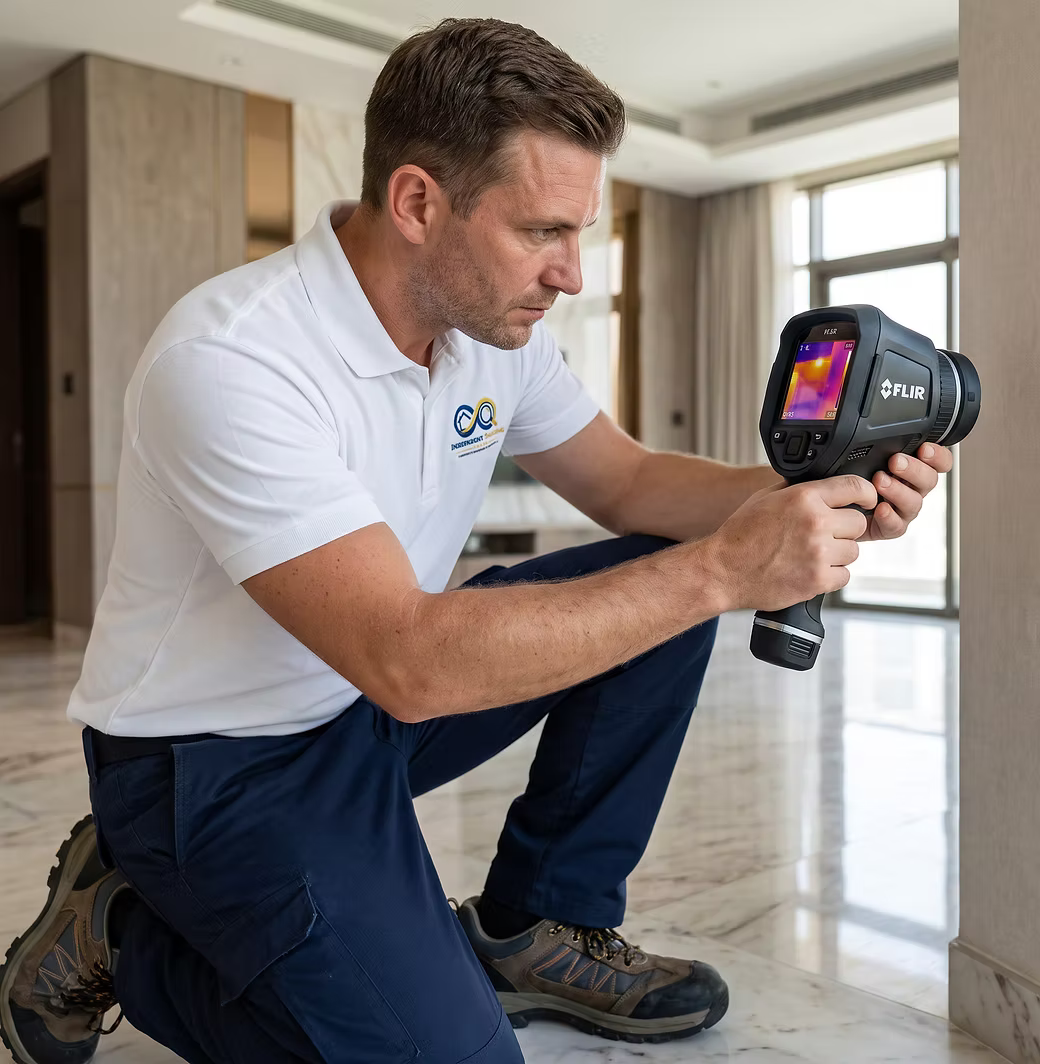
Using the latest advanced inspection tools such as thermal imaging, moisture detection and electrical testing, we help spot concerns including water leakage, damp or mould indicators, AC performance issues, plastering defects, poor finishes, electrical faults, cracks in walls, flooring issues, drainage and many other defects. You receive a clear photo-based report so you understand the property’s condition before you commit.
What our clients are saying…
Discover why our clients trust us with their property decisions.
5.0 Rated by 10.000+ clients
Richard D.
Damac Lagoons Handover Townhouse
Independent Snagging’s inspection was thorough, helping me spot issues and negotiate repairs before closing. David was very secure and spotted a lot of issues. I highly recommend him!

Julie M.
Landlord JVC Appartment
I booked them to inspect my apartment in JVC before renting it out. The report was very clear, giving me a solid record of the property’s condition before move-in and helping avoid disputes with tenants later.
Emily G.
Villa Handover Masaar Kaya, Sharjah
I wanted to do an inspection before committing fully to our finished house. The report helped me raise several defects that I would otherwise have missed. Money well spent!
Faisal E. B.
Townhouse Rental, Town Square
We were renting a townhouse in Dubai and wanted everything documented before move-in. Independent Snagging delivered a report which i signed together with my landlord, this gave us more peace of mind.
Muhammad R.
Resale Villa, Mina Al Arab
Buying a villa in Ras Al Khaimah felt risky without an inspection. My wife said there was no need but i’m glad i hired them. Independent Snagging gave us a much clearer picture of the property before transfer, there were some leakage issues in the walls we would have otherwise missed. It saved us a lot of money
Zoya M.
Rental Appartment, Saadiyat Island
We arranged an inspection before moving into our new apartment in Abu Dhabi, and it was one of the best decisions we made. They were very clear with explaining everything before they started. Also everything was documented properly with photos, and this will help avoid arguments later about pre-existing issues.
Property Snagging Reports, Checklists and Inspection Guides
Explore insights to help you make informed decisions about your property.
-
Property Inspection in Dubai: How to Check a New Build Before You Sign in 2026
Explore: Property Inspection in Dubai: How to Check a New Build Before You Sign in 2026 -
Handover Inspection in Dubai: Property Snagging Inspection & Buyer Checklist
Explore: Handover Inspection in Dubai: Property Snagging Inspection & Buyer Checklist -

Why Skipping a Home Inspection Could Cost You in the Long Run
Explore: Why Skipping a Home Inspection Could Cost You in the Long Run
Ready to Secure Your Property’s Safety?
Book a comprehensive inspection with our certified experts today!
Property Snagging FAQs
What Is Property Snagging and Why Does It Matter in Dubai?
What is a property snagging inspection in Dubai?
A property snagging inspection is a specialised property inspection: a detailed walk through of a new or existing property to identify defects, poor workmanship, incomplete finishes and visible installation problems before you accept handover, move in or complete a purchase. Our InterNACHI-certified inspectors check every room, wet area, balcony and external area of your apartment, villa or townhouse, then record each snag with photos and notes in a detailed snagging report. That report becomes your snag list, which you can hand to the developer or contractor so the defects are fixed before you take the keys.
Why is property snagging important in Dubai and the UAE?
Dubai’s real estate market moves fast, and new homes are often handed over with hidden defects that are easy to miss during a quick viewing, such as water leakage, damp walls, hollow tiles, faulty power sockets or weak air conditioning. Property snagging gives buyers, investors, landlords and tenants an independent record of the property’s condition before these issues become harder and more costly to resolve. It protects your investment, strengthens your position with the developer and makes sure rectification happens while it is still the developer’s responsibility, not yours.
Is property snagging mandatory in Dubai?
No. Property snagging is not a legal requirement for buyers in Dubai or elsewhere in the UAE, but it is strongly recommended. Once you sign the handover documents, it becomes much harder to prove that a defect existed before you moved in. An independent snagging inspection before handover gives you written, photo-based evidence of every snag, so you can ask the developer to fix the defects at no cost to you.
What is the defect liability period in Dubai?
The defect liability period (DLP) is the time after handover during which the developer remains responsible for fixing defects in your property. In Dubai, Article 40(b) of Law No. 6 of 2019 provides a one-year post-handover liability period for defective installations such as plumbing, electrical and air conditioning components. A DLP snagging inspection carried out before this period ends documents any outstanding or newly developed defects in a clear snagging report, so you can raise them with the developer while rectification is still their responsibility.
What is the difference between a snagging inspection and a handover inspection?
The two terms are often used interchangeably, but they differ in timing and focus. A handover inspection takes place when the developer invites you to view the finished unit before you accept the keys, and it confirms whether the property is complete and ready to occupy. A snagging inspection is the detailed defect check itself, and it can be carried out at handover, during the defect liability period, before buying a resale property, or at move-in or move-out of a rental. We carry out both, and every inspection ends with a detailed snagging report.
Is property snagging worth it for investors and landlords?
Yes. For property investors, a snagging inspection is a small cost compared with the repairs, vacancy and tenant disputes that hidden property defects can cause later. Finding water leakage, moisture, AC performance issues or electrical faults before handover means the developer fixes them, not you. For landlords, a documented condition report at move-in helps protect the security deposit and avoid disputes with tenants at the end of the tenancy, and it gives you a baseline record for future inspections.
Do I need a property snagging inspection if my developer is reputable?
Yes. Even the best developers in Dubai work with many subcontractors across hundreds of units, and small defects slip through on almost every construction project. Developers carry out their own quality checks, but those checks are not independent of the company that built the property. An independent property inspection gives you an unbiased second set of trained eyes working only on your behalf, and reputable developers are used to receiving a detailed snagging report and acting on it.
How do I choose a reliable property snagging company in Dubai?
Choose a snagging company that is fully independent of developers and agents, uses certified property inspection professionals, and can explain exactly what its report includes before you book. Ask which tools the inspectors bring, how quickly the report is delivered and whether they cover your emirate. Independent Snagging has more than 10 years of experience, our inspectors are InterNACHI certified, we use advanced tools such as thermal imaging cameras and moisture meters, and we deliver a detailed photo-based snagging report within 12 hours.
How Does a Property Snagging Inspection Work?
When should I book a property snagging inspection?
Book your snagging inspection as soon as the developer tells you the property is ready for orientation or handover, and before you sign the handover documents or move in. This gives the developer time to fix the snags before you accept the keys. If you have already moved in, book a DLP inspection before your one-year defect liability period ends. For a resale property, book before the transfer is completed, and for a rental, book at move-in and again at move-out.
How long does a property snagging inspection take?
It depends on the size, layout and condition of the property. A studio or one-bedroom apartment usually takes a few hours, while a large villa or townhouse can take most of the day. A thorough snagging inspection should never be rushed, because every room, wet area, balcony, fitting and system needs to be checked and tested carefully. We give you an estimated duration when you book, based on the property type and size.
Do I need to be present during the snagging inspection?
No. You do not need to attend the snagging inspection. If you are overseas or unable to be there, we can deal with the relevant parties where possible, complete the inspection and send you the report. If you would like to attend, you are welcome to join us on site and walk through the findings with the inspector.
Do DEWA and utilities need to be connected before the inspection?
Yes. For a complete inspection, electricity, water, air conditioning and gas (where applicable) should be connected before the appointment, which in Dubai usually means your DEWA connection is active. With utilities on, we can properly test power sockets, lighting, plumbing, water pressure, drainage, water heaters and AC performance. Without them, these systems can only be checked visually and some defects may go unnoticed.
What does a snagging inspection check, and which tools do you use?
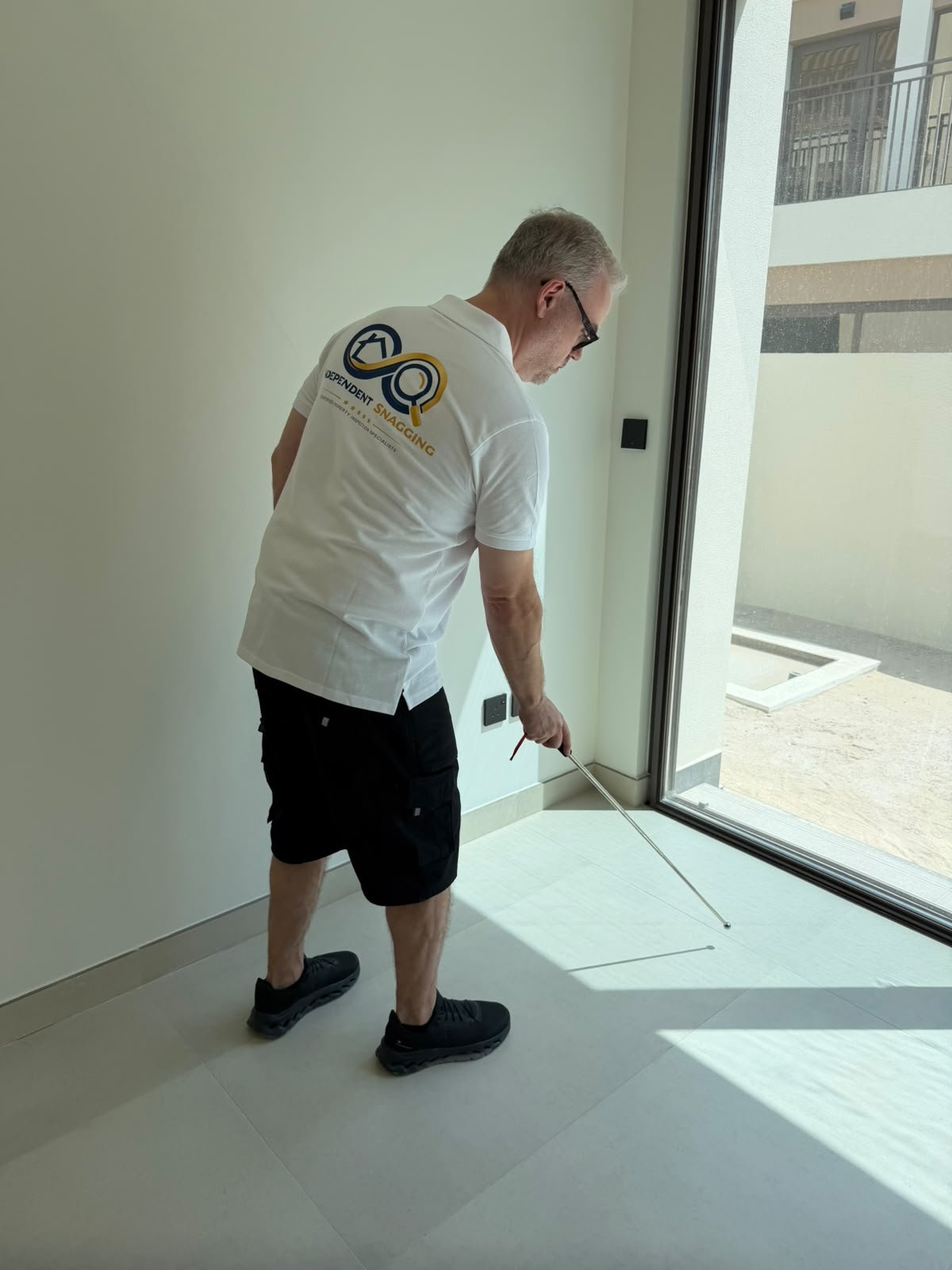
We check the whole property: walls, plastering and paintwork; flooring and tiles; doors, windows and glazing; kitchens and bathrooms; plumbing, water pressure and drainage; electrical points and power sockets; air conditioning, ventilation and ducts; joinery and staircases; balconies, external walls, sealants and garden areas; and levels and alignment. Our inspectors use a thermal imaging camera, moisture meter, laser level, socket tester, digital multimeter, digital anemometer, infrared thermometer, endoscope camera, spirit level, noise detector and tile hammer to find hidden defects that cannot be seen with the naked eye.
What defects are commonly found during a snagging inspection in Dubai?
The most common snags we find in Dubai properties include hollow or uneven tiles, paint and plastering defects, cracks in walls, poorly sealed wet areas, water leakage and damp, plumbing and drainage issues, faulty electrical points, weak AC performance or poor airflow, damaged doors and windows, misaligned fittings and unfinished works. Thermal imaging often reveals moisture behind walls or gaps in insulation that are invisible during a normal viewing. Every property is different, so the number and type of defects will vary.
What does your snagging report include?
Your detailed snagging report lists every defect we find, with a written description, its location in the property and clear photographs, so the developer or contractor knows exactly what needs to be fixed and where. The report is delivered within 12 hours of the inspection and is easy to review and share. Where possible, we can also submit the snag list to the developer on your behalf.
Can you re-inspect after the developer fixes the snags?
Yes. Once the developer has carried out the rectification works, we can return for a follow-up inspection to verify that each item on the snag list has been fixed properly and that no new defects have appeared. A re-inspection is especially useful before you sign the final handover documents.
What Do Snagging Services Cost and Which Properties Do You Inspect?
How much does a property snagging inspection cost in Dubai?
The cost of a property snagging inspection in Dubai depends on the property type, its size in square feet, the number of bedrooms, the type of inspection (handover, DLP, resale or rental) and where the property is located in the UAE. A studio apartment costs less to inspect than a large villa with a garden. We provide a tailored quote in dirhams (AED) before you book, and you can pay by bank transfer, card payment link or ATM deposit. Contact us with your property details for a quote.
Do villas, townhouses and apartments need different snagging inspections?
Yes. Every property type has different snagging issues. Apartment snagging focuses on interior finishes, fittings, bathrooms, kitchens, balconies, doors, windows and AC performance. Villa and townhouse snagging covers all of that plus external walls, sealants, driveways, garden areas, staircases and a larger number of wet areas and plumbing points, so it takes longer. We tailor each inspection to your apartment, villa, townhouse or penthouse so nothing is missed.
Is snagging only for new properties, or can you inspect resale and rental homes?
Snagging is most common for new and off-plan properties, but our snagging services also cover secondary market (resale) properties with a pre-purchase property inspection before transfer, homes still within the defect liability period, rental properties at move-in or move-out, and properties that have just been renovated. For tenants and landlords, a move-in inspection creates a documented record of the property’s condition that helps protect the security deposit and avoid disputes at the end of the tenancy.
Do you carry out snagging inspections outside Dubai?
Yes. We inspect properties across all seven emirates of the UAE: Dubai, Abu Dhabi, Sharjah, Ajman, Ras Al Khaimah, Fujairah and Umm Al Quwain. Whether your apartment is in Abu Dhabi, your villa is in Sharjah or your resale home is in Ras Al Khaimah, you receive the same InterNACHI-certified property inspection and detailed snagging report. Contact us with your property location and handover date and we will confirm availability.
Property snagging checklist and report guide
Use this guide to prepare for property snagging and inspection, understand the checks and review your snagging report. Every inspection depends on safe access and the agreed scope. Keep your reports and repair updates together so you can follow each snag through rectification.
Property Snagging Company Checks for Dubai Homebuyers and Investors
Property snagging company assessment
Property snagging
Choose the inspection around the decision you need to make. New homes need a handover assessment before final acceptance. Resale properties need a record of condition before transfer. Rental properties benefit from evidence before occupation. Our property snagging company documents accessible defects so you can discuss the findings with the responsible party. An inspection gives you information; it does not replace your purchase contract or specialist advice.
Independent inspection scope and certified expertise
Compare snagging companies by the scope of their inspection and the clarity of their reports. Ask what is tested and which areas are accessible. Check whether electricity, water and air conditioning must be working. Confirm how the company handles restricted access. Request the report turnaround before booking. These questions help homebuyers compare property snagging and inspection services on a consistent basis.
Property Snagging Inspection of Plumbing Systems, Water Leakage and Drainage
Property snagging inspection in kitchens and bathrooms
Plumbing inspection of taps, water pressure and drainage
Our snagging checks cover accessible plumbing fittings in kitchens, bathrooms and other wet areas. The inspection looks for visible leaks, loose connections and drainage concerns. Running water helps reveal problems that a dry viewing may miss. A slow drain or leaking fitting becomes a recorded snag. Reports identify the affected area so the contractor can investigate. Water quality laboratory testing is a separate service to discuss if needed.
Waterproofing, moisture content and bathroom sealants
Poor sealant around baths, showers and sinks can allow water into adjacent finishes. Moisture readings help investigate damp areas during the inspection. A thermal imaging camera can reveal temperature patterns that need further checking. Those patterns alone do not prove a leak. Concealed waterproofing cannot always be confirmed without invasive investigation. The inspection report should explain the evidence and any access limitations.
Property Snagging Inspection of Electrical Points, Power Sockets and Lighting
Property snagging checks for electrical installations
Socket tester, voltage tester and digital multimeter checks
Active electricity allows the inspector to test accessible power sockets and lighting points. A socket tester and digital multimeter support electrical checks within the agreed scope. Damaged fittings, loose faceplates and non-working outlets need attention. Each snag is recorded in the report. A voltage tester is an electrical testing tool to ask about when comparing inspection scopes. Specialist testing of concealed wiring may require an electrician.
Electrical safety observations and inspection limitations
Keep distribution boards and electrical points accessible on the inspection day. Tell the company about known faults before the appointment. Do not cover damaged outlets with furniture. An inspection records observed condition at the time of the visit. It does not guarantee the future performance of an electrical system. Reports should distinguish an observed defect from a system that could not be tested.
Property Snagging Inspection of Air Conditioning, HVAC Ducts and Ventilation
Property snagging inspection of cooling performance
Anemometer airflow checks, humidity and duct condition
Air conditioning matters in Dubai and across the UAE. Working utilities let inspectors assess cooling and airflow in accessible rooms. A digital anemometer helps measure air movement at outlets. Weak airflow, unusual noise or visible condensation can warrant further investigation. Accessible ducts and ventilation grilles are checked within the inspection scope. Humidity and occupancy can affect readings, so reports should describe the conditions during testing.
Property Snagging Inspection with Thermal Imaging, Moisture Detection and Insulation Checks
Property snagging assessment using inspection tools
Thermal imaging camera findings and thermal bridging
Thermal imaging supports the visual inspection by showing surface temperature differences. It can help identify areas that may need moisture or insulation checks. Thermal bridging is heat transfer through parts of a building envelope. A temperature difference can have several causes. Inspectors interpret it alongside visible condition and other measurements. The report should explain why a finding matters without presenting every thermal pattern as a confirmed defect.
Property Snagging Inspection of Flooring, Paintwork, Plastering and Joinery
Property snagging checks for construction finishes
Tile hammer, spirit level, doors and window alignment
Finishing defects are easy to overlook during a short viewing. Our inspection checks accessible flooring, wall finishes and fittings. A tile hammer helps investigate hollow-sounding tiles. A spirit level or laser level supports alignment checks. Doors, windows and joinery should open, close and fit as intended. Paint damage, unfinished plastering and misaligned fittings are documented as snags for the developer or contractor to review.
Property Snagging Inspection for Villas, Townhouses, Balconies and External Areas
Property snagging inspection of larger properties
Villa inspection of staircases, garages and garden areas
Villas and townhouses can have more inspection areas than apartments. Accessible staircases, balconies, external walls and garden areas need attention. Ask whether the garage and boundary areas are included in your quote. Property access affects what can be checked. The inspection report should state any area that was unavailable. Owners can then arrange further checks rather than assume an inaccessible area was inspected.
Property Snagging Inspection for Apartments, Penthouses and Rental Properties
Property snagging reports for tenants and landlords
Apartment inspection and tenancy condition reports
Apartment inspections focus on accessible interiors, balconies, fittings and services. A penthouse may require additional time because of its size and layout. For rental properties, condition reports help tenants and landlords discuss existing damage. Photos provide a reference for future comparisons. Keep a copy of the report with the tenancy records. Record any areas or systems that could not be checked before move-in.
Property Snagging Report with Photos, Defect Locations and Rectification Notes
Property snagging report review
Snag list, photo evidence and remediation responsibilities
A useful snag list tells the reader what was observed and where. Our reports document defects with descriptions and photographs. Share the report with the developer, contractor or owner responsible for rectification. Ask them to confirm how each snag will be addressed. Remediation and repair works remain their responsibility. Keep the original inspection report alongside later updates so outstanding items remain easy to track.
Property Snagging Inspection after Rectification, Renovation and DLP Repairs
Property snagging inspections to review completed repairs
Re-inspection reports and outstanding property defects
A follow-up inspection checks the condition after reported repairs. Use the original snag list as the reference. Ask whether each defect was addressed or needs further work. Renovation can also introduce new finishing issues. Reports from different visits help explain what changed. Confirm the re-inspection scope and quote with the company before arranging another appointment.
Property Snagging Company Booking, Inspection Pricing and UAE Service Areas
Property snagging company service enquiries
Property inspection quotation, access and utility checklist
Send your property type, size, location and preferred date when requesting a quote. Tell us whether you need handover, DLP, resale or rental inspection services. Confirm site access with the relevant parties. Connect electricity, water and air conditioning where possible. Our company covers Dubai, Abu Dhabi, Sharjah, Ajman, Ras Al Khaimah, Fujairah and Umm Al Quwain. Availability and inspection pricing are confirmed for your particular property before booking.
Property snagging checklist for preparation, inspection and report review
Property snagging services
Use this practical checklist to prepare for a visit, understand the inspection scope and follow up on reported defects. Choose a property snagging service by its scope, evidence and follow-up. Snagging inspection, property checks and report review work best when each issue has a clear location and an agreed next step.
Preparing for property snagging
How does a property snagging team prepare for a thorough inspection?
Inspection: Our property snagging team needs confirmed access, a contact on site and enough time to inspect the agreed areas without rushing. Tell us whether the home is vacant, occupied or still under construction.
Property defects: A property snagging service depends on the condition and availability of each area. Locked rooms, covered finishes and disconnected utilities can restrict the checks that an inspector can complete.
Snagging report: The snagging report should separate inspected areas from access restrictions. A photograph of a locked door explains why the room needs a later visit.
Property snagging checklist: Before the inspection, confirm entry permissions and ask which utilities can be connected. Share the property type, size, community and handover appointment when requesting a quote.
Repairs and review: If access is restricted, arrange a practical follow-up with the responsible party. A snagging inspection cannot confirm the condition of an area that has not been seen.
- Inspection check: Entry permissions
- Property condition: Available utilities
- Property snagging report: Accessible rooms
- Repair review: Inspection restrictions
Property snagging checklist for plans, unit details and handover documents
Inspection: A property snagging checklist starts with the correct unit number, property address and inspection purpose. Clear identification prevents photographs and repair notes being assigned to the wrong home.
Property defects: Keep available plans, specification lists and handover correspondence together. These documents help explain whether a fitting is missing or a finish differs from what you expected.
Snagging report: Ask for snagging report references that describe the room and item clearly. A note such as kitchen base cabinet is easier to act on than an unexplained close-up photograph.
Property snagging checklist: Share existing concerns with the snagging team before the visit. Mark any previous repairs that you want checked again so the inspector can distinguish them from new observations.
Repairs and review: Where a contractual specification needs interpretation, raise it with the appropriate adviser or developer. Property snagging records condition and visible issues; it does not replace contract advice.
- Inspection check: Unit identification
- Property condition: Available plans
- Property snagging report: Prior repair records
- Repair review: Handover concerns
Property snagging report locations, room names and clear inspection references
Inspection: A useful property snagging report identifies the room before describing the defect. Consistent location names help owners, contractors and remote buyers discuss the same issue.
Property defects: Use a wider photograph to show where an item sits and a closer image to show the concern. A single close-up may hide the scale or exact position of the problem.
Snagging report: Keep the location reference unchanged during repairs and reinspection. This allows the snagging inspection record to follow an issue from the first visit to its final review.
Property snagging checklist: Agree simple room names before your property is snagged. In a large villa, labels such as first-floor rear bedroom are more useful than bedroom alone.
Repairs and review: When reviewing the report, ask for clarification if you cannot locate a defect. A clear explanation makes the repair request more practical for everyone involved.
- Inspection check: Room name
- Property condition: Wide photograph
- Property snagging report: Close-up evidence
- Repair review: Consistent issue reference
Interior inspection and finishing checks
Snagging inspection of walls, ceilings, plaster repairs and visible building defects
Inspection: Snagging inspection of walls and ceilings looks at visible cracks, patching, staining and uneven finishes. Observations should describe the appearance without claiming a hidden cause that has not been established.
Property defects: A hairline mark, an open joint and a stained ceiling need different descriptions. Their location, extent and surroundings help the responsible party decide what further assessment is required.
Snagging report: The snagging report can record photographs and the surface affected. Where an observation needs investigation beyond the agreed inspection scope, the limitation should be stated clearly.
Property snagging checklist: Leave surfaces visible where practical and tell us about recent painting or known leakage. Fresh decoration may make previous property defects more difficult to identify.
Repairs and review: After repairs, review both the original mark and the surrounding finish. Painting over a stain does not by itself establish that its source has been resolved.
- Inspection check: Wall finish
- Property condition: Ceiling condition
- Property snagging report: Crack location
- Repair review: Stain or patch evidence
Property snagging inspection of floor tiles, grout, levels and workmanship issues
Inspection: Property snagging inspection checks visible floor condition, damaged tiles, uneven transitions and incomplete grout. The method depends on the material and access available at the time.
Property defects: Look for chips, scratches, gaps and inconsistent edges around fitted items. A finish that looks acceptable in one area may have a different condition under a doorway or near a wall.
Snagging report: The snagging report should identify the room and affected tile or floor area. Distinct references help prevent a contractor repairing a nearby item while leaving the original concern unresolved.
Property snagging checklist: Keep floor surfaces clear where possible before the inspection. Rugs, furniture and protective coverings may prevent the inspector from seeing the finish underneath.
Repairs and review: Review replacement work for matching finish and neat joints as well as the original defect. Ask the responsible contractor to explain any further investigation required for movement or persistent damage.
- Inspection check: Floor surface
- Property condition: Tile edges
- Property snagging report: Grout joints
- Repair review: Threshold transition
Property snagging checks for paint, cabinets, doors, trim and installation quality
Inspection: Property snagging checks cover visible paintwork and accessible joinery, including cabinets, trim and fitted doors. The aim is to document workmanship concerns and items that do not operate as expected.
Property defects: Examine alignment, surface marks, loose fittings and incomplete sealing. An uneven cabinet door may need adjustment, while a damaged panel may require a different repair.
Snagging report: Our snagging report records the affected component rather than treating an entire room as one defect. Separate issue descriptions support clearer discussions about rectification.
Property snagging checklist: Empty accessible cupboards where practical so the inspector can see hinges and internal finishes. Tell the snagging experts if a fitting is intentionally incomplete or waiting for installation.
Repairs and review: When work is corrected, check function as well as appearance. A neatly repainted door still needs to open, close and latch properly during the follow-up review.
- Inspection check: Paint finish
- Property condition: Cabinet alignment
- Property snagging report: Door operation
- Repair review: Trim and seals
External property inspection and access
Snagging inspection of glazing, windows, seals and safe property access
Inspection: Snagging inspection of windows and external doors considers visible glass condition, accessible seals and operation. The agreed scope and safety of access determine what can be checked.
Property defects: Scratched glazing, loose handles and gaps around frames should be described individually. A photograph is useful, but a functional concern also needs a plain explanation of what happened.
Snagging report: The property snagging report can distinguish a surface mark from a problem opening or closing the unit. This helps the contractor understand the type of correction being requested.
Property snagging checklist: Keep keys available and confirm which doors can be opened safely. The snagging team should not force a locked or damaged fitting to obtain access.
Repairs and review: After repairs, review the original issue and the surrounding seal or finish. If a specialist test is needed, arrange it through the appropriate qualified provider.
- Inspection check: Glazing condition
- Property condition: Frame seals
- Property snagging report: Handle function
- Repair review: Opening and closing
Property snagging inspection of balconies, external walls, drainage and villa surfaces
Inspection: Property snagging inspection of external areas depends on safe access and the property type. Balconies, terraces and villa finishes can reveal concerns that are easy to overlook during a quick viewing.
Property defects: Visible staining, incomplete sealant, cracked finishes and debris near drains need location-specific observations. The report should not infer concealed waterproofing performance from appearance alone.
Snagging report: Record the external area and the affected component in the snagging report. Note any inaccessible edge or shared area that falls outside the agreed inspection scope.
Property snagging checklist: Confirm access to balconies and outdoor spaces before the visit. Ask the responsible party to remove avoidable obstructions without creating an unsafe working area.
Repairs and review: Follow up on repairs with clear photographs and a review of accessible drainage points. Further testing may be needed where a recurring concern cannot be explained by the visible condition.
- Inspection check: External finish
- Property condition: Accessible drainage
- Property snagging report: Visible sealant
- Repair review: Safe access limits
Property snagging assessment of stair finishes, handrails and visible common-area issues
Inspection: A property snagging assessment can record accessible stairs and related finishes where they are within the agreed scope. Confirm responsibility for private and shared areas before the inspection.
Property defects: Loose fittings, damaged edges and incomplete finishes should be located precisely. A common-area observation needs to be distinguished from a defect inside the individual property.
Snagging report: The snagging report should explain which stair or landing is affected. This is especially useful in townhouses and villas with several similar levels.
Property snagging checklist: Tell the inspection team about any access restrictions or areas still being completed. Work under way can affect both the visible condition and safe movement through the property.
Repairs and review: Repair responsibility should be discussed with the relevant developer, contractor or manager. A condition report supports that discussion without replacing a specialist safety assessment.
- Inspection check: Stair finish
- Property condition: Handrail fittings
- Property snagging report: Landing location
- Repair review: Private or shared responsibility
Plumbing inspection and moisture checks
Property snagging inspection of plumbing, taps, sanitaryware and visible leakage
Inspection: Property snagging inspection of plumbing considers accessible fittings and their visible condition, with functional checks where water is available. Disconnected supply limits what can be assessed.
Property defects: Check the location of leaks, damaged sanitaryware and loose fixtures. Water appearing beneath a fitting should be recorded separately from cosmetic marks on the same surface.
Snagging report: The snagging report should describe what was observed during the check. It should also record when the water supply or an inaccessible connection prevented further inspection.
Property snagging checklist: Ask for water to be connected before the visit where possible. Leave accessible sink cupboards clear so visible pipework and surrounding surfaces can be inspected.
Repairs and review: Review repairs after the responsible party has completed the work. Persistent leakage or concealed pipe concerns may require additional investigation by a qualified plumbing specialist.
- Inspection check: Water availability
- Property condition: Visible connections
- Property snagging report: Fixture condition
- Repair review: Leak evidence
Property snagging checks for drainage, shower seals, bathroom finishes and moisture issues
Inspection: Property snagging checks in bathrooms and kitchens cover visible wet-area finishes and accessible drainage. Practical testing depends on connected utilities and the agreed inspection method.
Property defects: Incomplete sealant, standing water and damaged joints should be identified by location. These observations have different possible causes and should not be combined into one vague repair request.
Snagging report: A snagging report can document the condition observed around a drain or shower enclosure. Any restriction affecting the test needs to accompany the finding.
Property snagging checklist: Keep wet areas accessible and explain any known drainage history. Tell the snagging team if recent cleaning, maintenance or repair may affect the condition seen during the visit.
Repairs and review: After rectification, review both the reported issue and the adjacent finish. A repaired seal should be checked in context rather than accepted solely from a close-up photograph.
- Inspection check: Drain location
- Property condition: Visible wet-area finish
- Property snagging report: Seal condition
- Repair review: Observed water movement
Snagging inspection with thermal imaging, moisture checks and careful report interpretation
Inspection: Snagging inspection can use thermal imaging and moisture tools to support observations about accessible surfaces. These tools provide indications that need to be interpreted alongside the property condition.
Property defects: A temperature difference does not establish a leak on its own. Ventilation, sunlight, material differences and operating conditions can all affect what the inspection equipment shows.
Snagging report: The property snagging report should connect tool observations to the location and visible evidence. It should explain when additional investigation is needed to understand the cause.
Property snagging checklist: Share known leakage or damp concerns before the inspection. Keep access available to the area so the inspector can compare the observation with nearby surfaces.
Repairs and review: Ask the responsible specialist to investigate unresolved concerns and document the work completed. A follow-up inspection can review accessible evidence without claiming to see every concealed component.
- Inspection check: Thermal observation
- Property condition: Moisture indication
- Property snagging report: Visible supporting evidence
- Repair review: Investigation recommendation
Electrical inspection, HVAC and kitchen checks
Property snagging inspection of sockets, switches, lights and visible electrical issues
Inspection: Property snagging inspection includes accessible electrical points and visible installation concerns within the agreed scope. Energised circuits are needed for relevant functional checks.
Property defects: Loose fittings, damaged covers and non-working lights should be recorded by location. These observations must not be treated as a substitute for a full electrical installation assessment.
Snagging report: The snagging report should say which point was checked and what was observed. It should distinguish a disconnected supply from an item that did not function during the inspection.
Property snagging checklist: Confirm electricity availability and leave accessible points unobstructed. Tell the inspection team about any known fault so checks can be planned appropriately.
Repairs and review: Electrical repairs should be carried out by a qualified provider. Request appropriate repair evidence and review the reported point again when rectification is complete.
- Inspection check: Socket location
- Property condition: Switch operation
- Property snagging report: Lighting response
- Repair review: Visible fitting condition
Property snagging checks for air conditioning, HVAC airflow, ducts and visible maintenance concerns
Inspection: Property snagging checks cover accessible air-conditioning operation and visible ventilation concerns. The equipment must be available and running under suitable conditions for relevant observations.
Property defects: Unusual noise, weak airflow and visible staining deserve separate report entries. A single symptom does not identify every possible fault within concealed ducts or equipment.
Snagging report: Our snagging report links the observation to the room and accessible outlet or unit. Any limitation affecting the inspection should be included alongside the finding.
Property snagging checklist: Ask for the system to be operational before the visit where practical. Let the snagging experts know about recent servicing or known issues that may affect interpretation.
Repairs and review: After repairs, review the reported concern under comparable operating conditions. Specialist diagnosis may be necessary for a recurring fault that a visible-condition inspection cannot resolve.
- Inspection check: System availability
- Property condition: Accessible airflow
- Property snagging report: Noise or staining
- Repair review: Operating conditions
Snagging inspection of accessible kitchen fittings, appliance installation and property finishes
Inspection: Snagging inspection of kitchens checks accessible cabinets, worktops and fitted items within the agreed scope. Appliance checks depend on what is installed, connected and available for inspection.
Property defects: Incomplete edges, damaged surfaces and doors that catch on neighbouring units should be described clearly. These issues may require different trades or separate rectification steps.
Snagging report: The property snagging report should identify the specific fitted item and concern. Missing equipment should be recorded separately from an item that is present but not functioning.
Property snagging checklist: Confirm which appliances are included and which can be operated during the visit. Avoid assuming that an empty space represents a defect without checking the intended specification.
Repairs and review: Review the repair against the original finding and check the surrounding installation. For manufacturer faults or commissioning issues, consult the appropriate supplier or specialist.
- Inspection check: Included equipment
- Property condition: Surface finish
- Property snagging report: Fitting alignment
- Repair review: Accessible function
Snagging report review and repairs
Property snagging report review for defects, repairs, evidence and clear contractor requests
Inspection: A property snagging report is most useful when each concern has a location, plain description and supporting evidence. Clear issue references make follow-up discussions easier.
Property defects: Keep separate defects separate even when they are close together. A damaged tile and a leaking fitting may need different contractors, repair methods and review dates.
Snagging report: When reviewing the snagging report, ask for clarification of any item you do not understand. A practical explanation helps you request correction without overstating the inspection finding.
Property snagging checklist: Send the responsible party a clear list of issue references and questions. Keep correspondence together so promised repairs can be compared with the original observations.
Repairs and review: Agree priorities with the appropriate responsible party or qualified adviser where specialist input is needed. An inspection record documents condition; it does not guarantee a repair outcome.
- Inspection check: Issue reference
- Property condition: Defect description
- Property snagging report: Photographic evidence
- Repair review: Repair response
Property snagging inspection after repairs, reinspection evidence and unresolved snags
Inspection: Property snagging inspection after repairs compares accessible work with the original report. Using the same issue references makes it easier to see what has changed.
Property defects: A photograph of a finished surface may not demonstrate that a functional concern is resolved. Ask what work was carried out and arrange an appropriate review of the reported issue.
Snagging report: The snagging report review should distinguish corrected items, unresolved snags and areas that remain inaccessible. This avoids treating every repair claim as a completed finding.
Property snagging checklist: Confirm that the contractor has finished before arranging reinspection. Ask for access to the reported areas and the same relevant utilities used during the first visit.
Repairs and review: Keep unresolved issues visible in your follow-up record. Further specialist assessment may be needed where a concern persists or falls beyond the agreed property inspection scope.
- Inspection check: Original reference
- Property condition: Completed work
- Property snagging report: Reinspection result
- Repair review: Unresolved snag
Property snagging services for remote buyers, handover checks and inspection report follow-up
Inspection: Our property snagging service can support owners who cannot attend the visit. Clear access arrangements and a named contact help the inspection proceed smoothly.
Property defects: Tell the property snagging company which concerns matter most and how you want the findings explained. A remote owner needs enough context to locate and discuss each reported issue.
Snagging report: The snagging report should be reviewed before questions are sent to the responsible party. Keep the original report and later repair responses together for a consistent record.
Property snagging checklist: If you are comparing a snagging survey with another inspection service, ask about scope, limitations, reporting and reinspection. Different services may use the same label for different checks.
Repairs and review: Contact us with the property details to arrange the next step. Our office hours are Monday–Friday, 9am–6pm Dubai time, with Saturday and Sunday closed.
- Inspection check: Inspection contact
- Property condition: Access arrangements
- Property snagging report: Report questions
- Repair review: Follow-up plan
Copy a property snagging record
Property snagging report notes help keep an inspection finding separate from the contractor’s reply. Property snagging reports and snagging checks should retain the same issue references throughout follow-up.
PROPERTY SNAGGING RECORD
Property: [unit and address]
Snagging inspection date: [date]
Inspection scope: [handover / DLP / resale / rental]
Snagging team contact: [name]
Property snagging report reference: [reference]
Room / location: [location]
Property defects: [observation]
Snags requiring review: [details]
Inspection evidence: [photo references]
Snagging assessment limitations: [restrictions]
Property repairs requested: [work]
Snagging report response: [contractor reply]
Property inspection follow-up date: [date]
Snagging checklist status: [open / reviewed]
Property snagging reinspection result: [observation]
Inspection review notes: [notes]
Your notes stay on this page and are lost when you reload. Copy them before leaving.
Choosing a property snagging company and following up on defects
Top defects to check before handover
Start with visible water leaks, uneven finishes, door and window operation, drainage, electrical fittings and air-conditioning concerns. These are practical inspection priorities; the accessible checklist above explains how to record each finding and when specialist assessment may be needed.
How do I compare property snagging companies?
Compare property snagging companies using the same scope, access assumptions and reporting requirements. Ask companies whether their snagging inspections cover your property type, which utilities must be connected and how limitations are recorded. The best snagging choice for your home should follow those practical answers, rather than a headline claim. Ask other companies for a sample report so property inspections can be compared on a consistent basis.
What makes the best snagging inspection for my property?
The best snagging inspection for your situation is one with a clear purpose, accessible evidence and an agreed next step. Explain whether you need handover, DLP, resale or rental checks. Ask how a snag is described, how its location is identified and how an inaccessible area is reported. A detailed snag record is easier to review than a vague repair request.
What should I look for in the best snagging report?
Look for a location, a plain description and a photograph for each snag. The best snagging report for your decision explains what was inspected and what could not be checked. Keep the original snag reference when the contractor responds. Review each snag separately so a nearby repair is not mistaken for correction of the reported item.
How do I track a snag through repair and review?
Keep one snag reference from the first inspection through contractor follow-up. Record the snag location, original photograph, requested action and reply. After repairs, compare the snag with the original evidence. If the snag remains unresolved or cannot be reviewed because access is restricted, keep that limitation in the record. Use the copyable template above to document the next step.
How can I prepare for property inspections and follow-up?
Confirm property access and working utilities where possible before the visit. Share known concerns with the inspector and agree the scope of the property inspections you need. Coordinate access with building management and contractor teams so inspections can cover the agreed areas without avoidable delays. Our property snagging services provide a practical record of visible condition. Snagging inspection findings should be discussed with the party responsible for rectification, with specialist advice arranged when a concern falls beyond the inspection scope.